
Kids VR
A calmer experience, even during treatment.
A virtual reality platform to help children feel calmer, with an experience tailored to the child and procedure at the treating team's discretion. Children's responses vary, and the system fits into the existing care process.
A calmer experience.
For the child, parent and team.
The experience aims to direct attention toward pleasant content during preparation or the procedure. The team checks suitability, explains what to expect and maintains communication with the child. No duration of calm or uniform response is guaranteed, and the experience does not replace pain treatment or medical judgment.
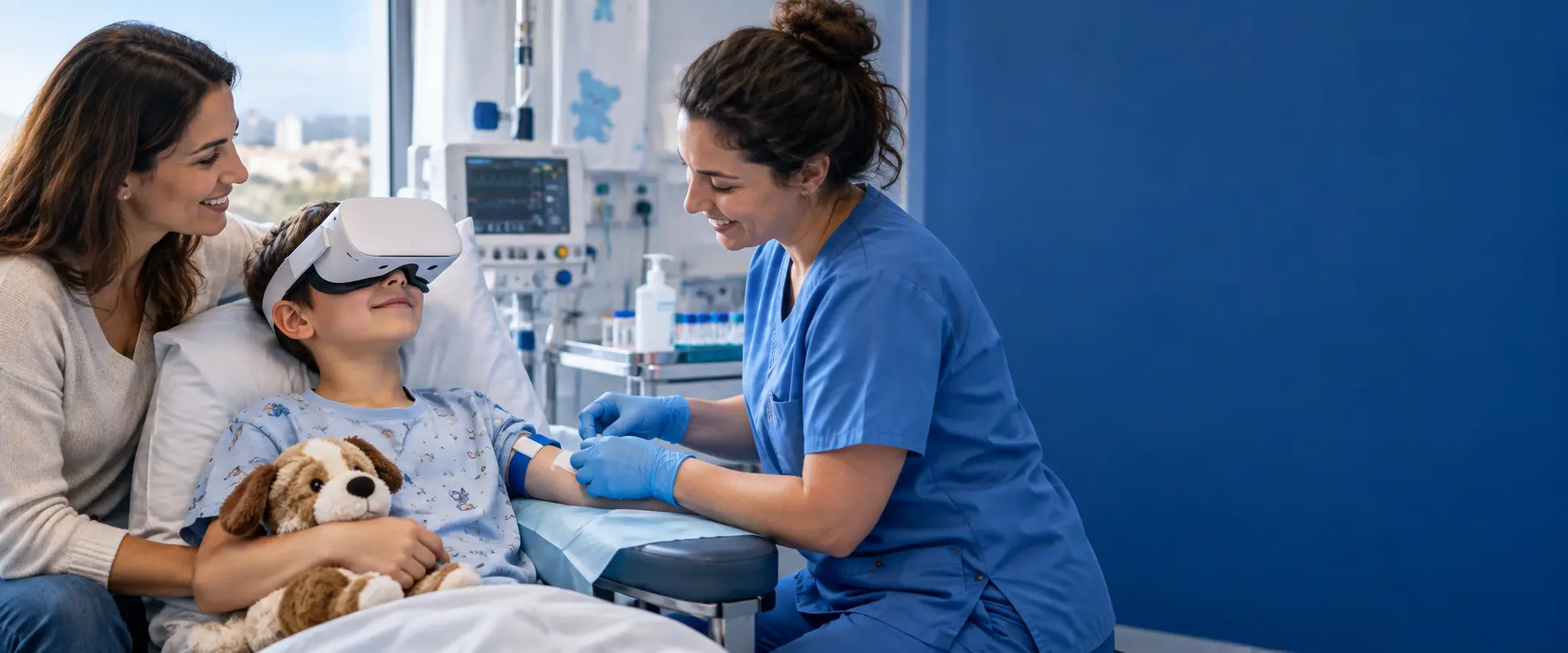 No handheld controllers • Gaze-based control
Start with the need.
Build toward everyday use.
Choose suitable content for the child
The team chooses an experience based on the child's age, preferences and planned procedure.
Allow familiarization at the child's pace
Introduce the headset and let the child get to know the virtual world.
The team carries out the treatment
Integrate the experience during the procedure according to the team's judgment and departmental protocols.
Finish and check how the child felt
End gently, clean the kit and prepare it for the next child.
What it looks like
in the real world.
What should you know?
When can the kit be used?
During blood tests, vaccinations, stitches and other procedures, subject to suitability for the child and the treating team's judgment.
Does the child need to hold controllers?
No. The content supports gaze-based control, keeping hands free and making it easier for the team.
What does implementation include?
Content familiarization, operational training and integration of a cleaning and disinfection procedure. Children's responses vary, so the team adapts the experience to each child.
What if the child does not want to participate or feels uncomfortable?
Use is never forced. Explain how to stop and maintain contact with the team. Suitability, stopping and continuing the procedure are determined by the device instructions and the treating team’s judgment.
How do you clean between children?
Use only materials and methods compatible with the manufacturer’s instructions for the model and contact surfaces, in coordination with organizational procedures. No single disinfection instruction applies to every VR headset.
What equipment is needed, and is a computer or internet connection required?
Requirements depend on the scenario and headset model. Before ordering, confirm a specification covering headsets, controllers if needed, a computer or display, network access, operating space and charging. Standalone headset operation, casting to a screen and offline use must be checked in the proposed system—not assumed.
How are licensing and pricing determined?
The quotation should distinguish equipment, existing content, customization, development, training and support. Define whether the license applies to a device, user or site, how long it lasts, which updates are included and what happens at the end. There is no single price or licensing plan that fits every project.
What is ready to use, and what needs customization or development?
During the demo, we will check which existing scenario fits your needs and what changes are needed to the model, language, protocol or feedback. Existing content, scenario customization and new development have different scopes; the proposal should state explicitly what you will receive.
How long does implementation take?
Implementation time depends on equipment availability, content scope, organizational approvals, customization and the team's ability to participate in a pilot. After requirements are defined, milestones cover content and specification approval, testing, operator training, the pilot and the expansion decision. A delivery date is set for the specific proposal.
What does training include, and who operates the system day to day?
Agree in advance who the local operator will be and what they need to know: starting and ending sessions, choosing content, supporting the user, handling common issues and following the manufacturer's cleaning instructions. Training scope, supporting materials and training for additional operators should be included in the proposal.
What support is provided, and what happens when a protocol changes?
Agree on the contact channel, service hours, equipment warranty, software and content updates, and issue-handling process. A protocol change also requires content review and professional approval. Response times, on-site service and updates vary by project and should be confirmed in writing.
What should we ask about privacy and data?
Before use with participants, map what data is collected, if any, where it is stored, who can access it, for how long, and how it can be deleted or exported. Also review device accounts, screen casting and service providers. Requirements and any necessary data-processing agreement are reviewed with the organization before implementation; this page does not claim compliance with a particular security standard.
