
Medic VR
Practice. Arrive better prepared.
The virtual reality platform for training medical teams: a safe, measurable training environment where teams can repeat complex scenarios, practice with expensive equipment and build confidence—without putting a patient at risk.
Practice again.
Arrive better prepared.
Medical teams need to act confidently in complex and rare situations, but training time and equipment access are not always available. VR lets trainees learn a device interface, practice workflows and decisions, receive feedback and repeat an approved scenario at their own pace—without involving a patient. The experience complements hands-on instruction and professional debriefing; it does not replace clinical training.
 Safe practice • Measurable debriefing
Start with the need.
Build toward everyday use.
Define the department's needs and goals
Define the skill, target audience and decisions the trainee needs to practice.
Build a scenario around the protocol
Translate the workflow and device interface into a safe environment for repeated practice.
Pilot and instructor training
Review the scenario with professionals and prepare the team to operate it.
Implementation, measurement and improvement
Integrate it into the training program and use feedback to focus the debriefing.
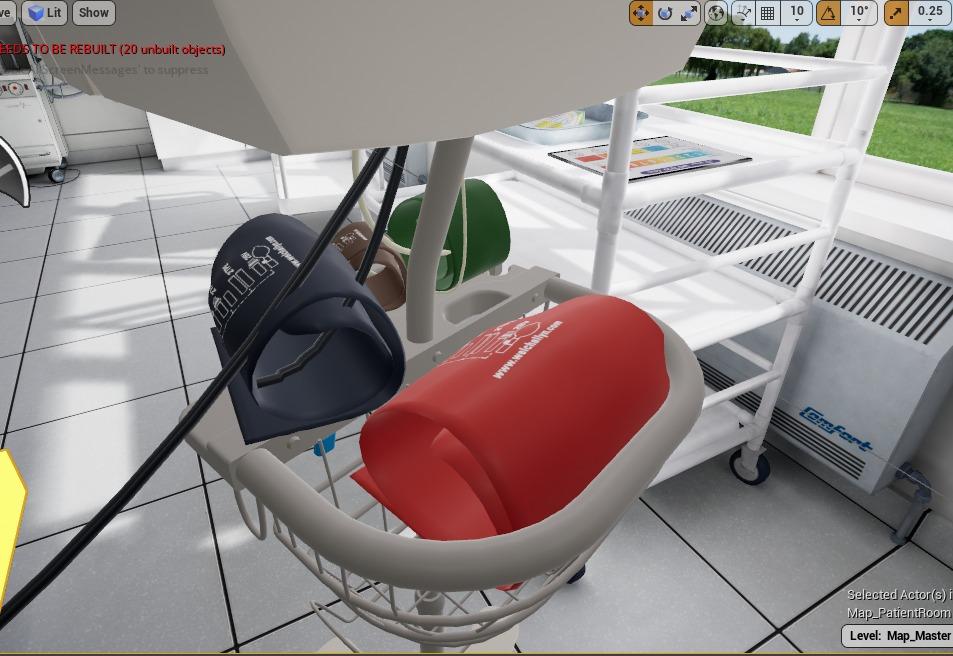
What it looks like
in the real world.


What should you know?
What can be practiced without access to a physical device?
Interface familiarization, a sequence of actions and decision-making. The scenario is tailored to the chosen model and protocol, and complements clinical experience with the real equipment.
Can trainees practice independently?
Structured guidance and feedback can support repetition at the trainee's own pace. Operation and debriefing arrangements are determined with the training team.
How do we get started in a department?
Choose a focused need and an initial scenario, run a pilot and train the instructors before expanding to routine use.
What equipment is needed, and is a computer or internet connection required?
Requirements depend on the scenario and headset model. Before ordering, confirm a specification covering headsets, controllers if needed, a computer or display, network access, operating space and charging. Standalone headset operation, casting to a screen and offline use must be checked in the proposed system—not assumed.
How are licensing and pricing determined?
The quotation should distinguish equipment, existing content, customization, development, training and support. Define whether the license applies to a device, user or site, how long it lasts, which updates are included and what happens at the end. There is no single price or licensing plan that fits every project.
What is ready to use, and what needs customization or development?
During the demo, we will check which existing scenario fits your needs and what changes are needed to the model, language, protocol or feedback. Existing content, scenario customization and new development have different scopes; the proposal should state explicitly what you will receive.
How long does implementation take?
Implementation time depends on equipment availability, content scope, organizational approvals, customization and the team's ability to participate in a pilot. After requirements are defined, milestones cover content and specification approval, testing, operator training, the pilot and the expansion decision. A delivery date is set for the specific proposal.
What does training include, and who operates the system day to day?
Agree in advance who the local operator will be and what they need to know: starting and ending sessions, choosing content, supporting the user, handling common issues and following the manufacturer's cleaning instructions. Training scope, supporting materials and training for additional operators should be included in the proposal.
What support is provided, and what happens when a protocol changes?
Agree on the contact channel, service hours, equipment warranty, software and content updates, and issue-handling process. A protocol change also requires content review and professional approval. Response times, on-site service and updates vary by project and should be confirmed in writing.
What should we ask about privacy and data?
Before use with participants, map what data is collected, if any, where it is stored, who can access it, for how long, and how it can be deleted or exported. Also review device accounts, screen casting and service providers. Requirements and any necessary data-processing agreement are reviewed with the organization before implementation; this page does not claim compliance with a particular security standard.
