
Don't just hear about the future.
Experience it.
Talks and workshops that combine inspiration with hands-on experience, showing teams how VR and AI can serve them today.
From inspiration to experience.
From experience to a practical idea.
Participants leave with more than a presentation. They enter scenarios, operate virtual medical equipment and experience how technology can shorten learning, deepen understanding and change processes.
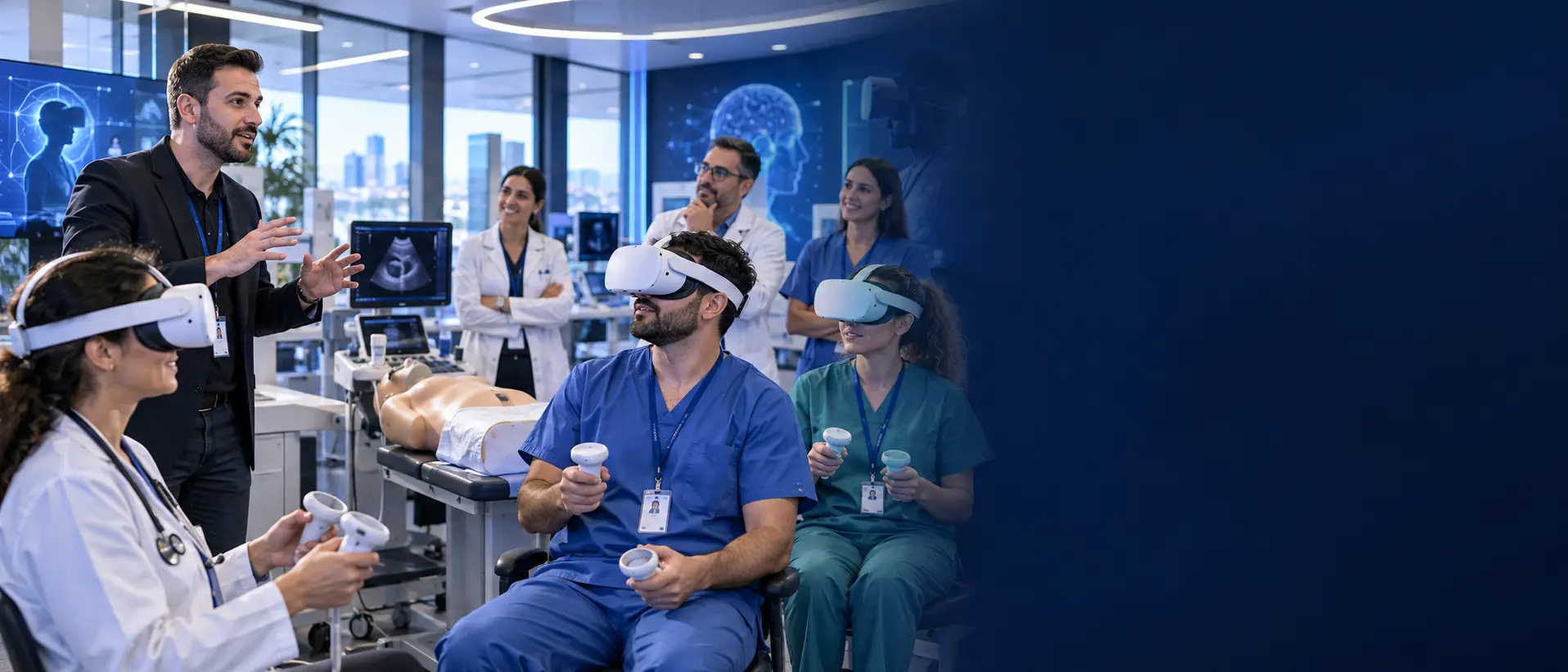 Talk • Demonstration • Hands-on experience
Start with the need.
Build toward everyday use.
Defining the audience and goals
We learn about the audience, their work and the challenges the session should bring to life.
Building the content and experiences
We choose examples, AI tools and VR scenarios that connect with participants' work.
Delivering an experiential session
We combine explanation, demonstration and hands-on practice, with time for questions.
Outlining possible next steps for the organization
Together, we identify potential uses and initial steps for the organization to take.
From our development work.
To your organization's discussion.
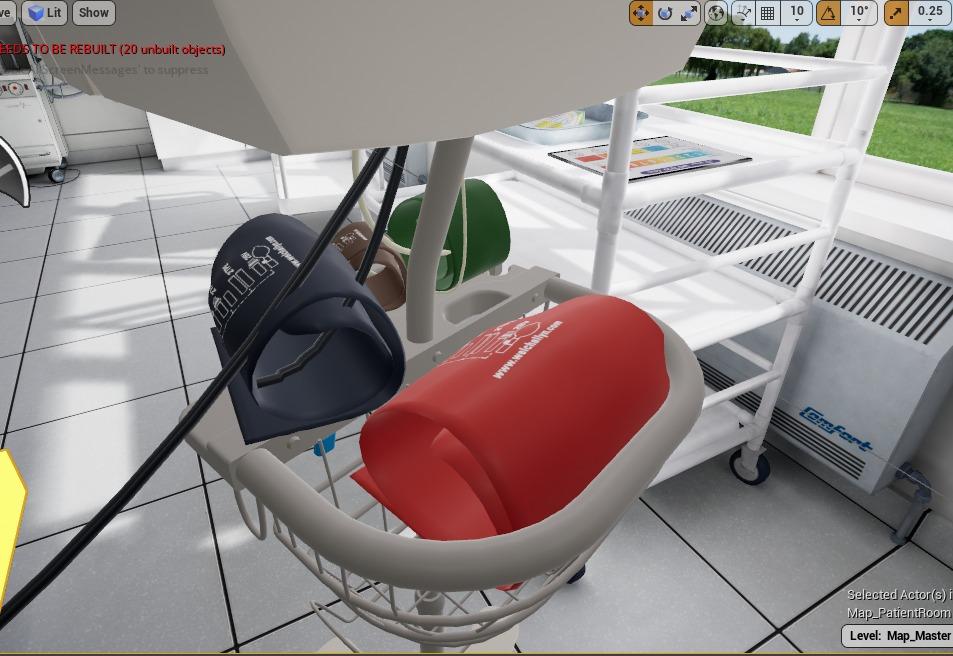
The ultrasound project showcases technology we developed. It is not documentation of a workshop or an endorsement of a particular event.


What should you know?
Who is the session for?
Medical and training teams, managers, educational institutions and organizations that want to understand the possibilities through hands-on experience.
What is the difference between a talk and a workshop?
A talk provides a broad overview and examples. A workshop devotes more time to hands-on practice and connecting the tools to participants' needs.
Can the session focus on a specific department?
Yes. A session can be built around emergency care, nursing, ultrasound or another need, with experiences chosen accordingly.
How much hands-on time does each participant get, and what does the venue need?
We define the session length, participant count, number of VR stations and planned hands-on time per person. We check available space, power, a screen and network access in advance according to the selected content; group size affects the format.
Who leads the session, and what do participants take away?
The speaker or facilitator, session topics and summary materials must be specified in the individual proposal. Workshop goals and outcomes are defined around the audience and its needs, rather than a uniform promise for every event.
What equipment is needed, and is a computer or internet connection required?
Requirements depend on the scenario and headset model. Before ordering, confirm a specification covering headsets, controllers if needed, a computer or display, network access, operating space and charging. Standalone headset operation, casting to a screen and offline use must be checked in the proposed system—not assumed.
How are licensing and pricing determined?
The quotation should distinguish equipment, existing content, customization, development, training and support. Define whether the license applies to a device, user or site, how long it lasts, which updates are included and what happens at the end. There is no single price or licensing plan that fits every project.
What is ready to use, and what needs customization or development?
During the demo, we will check which existing scenario fits your needs and what changes are needed to the model, language, protocol or feedback. Existing content, scenario customization and new development have different scopes; the proposal should state explicitly what you will receive.
How long does implementation take?
Implementation time depends on equipment availability, content scope, organizational approvals, customization and the team's ability to participate in a pilot. After requirements are defined, milestones cover content and specification approval, testing, operator training, the pilot and the expansion decision. A delivery date is set for the specific proposal.
What does training include, and who operates the system day to day?
Agree in advance who the local operator will be and what they need to know: starting and ending sessions, choosing content, supporting the user, handling common issues and following the manufacturer's cleaning instructions. Training scope, supporting materials and training for additional operators should be included in the proposal.
What support is provided, and what happens when a protocol changes?
Agree on the contact channel, service hours, equipment warranty, software and content updates, and issue-handling process. A protocol change also requires content review and professional approval. Response times, on-site service and updates vary by project and should be confirmed in writing.
What should we ask about privacy and data?
Before use with participants, map what data is collected, if any, where it is stored, who can access it, for how long, and how it can be deleted or exported. Also review device accounts, screen casting and service providers. Requirements and any necessary data-processing agreement are reviewed with the organization before implementation; this page does not claim compliance with a particular security standard.
